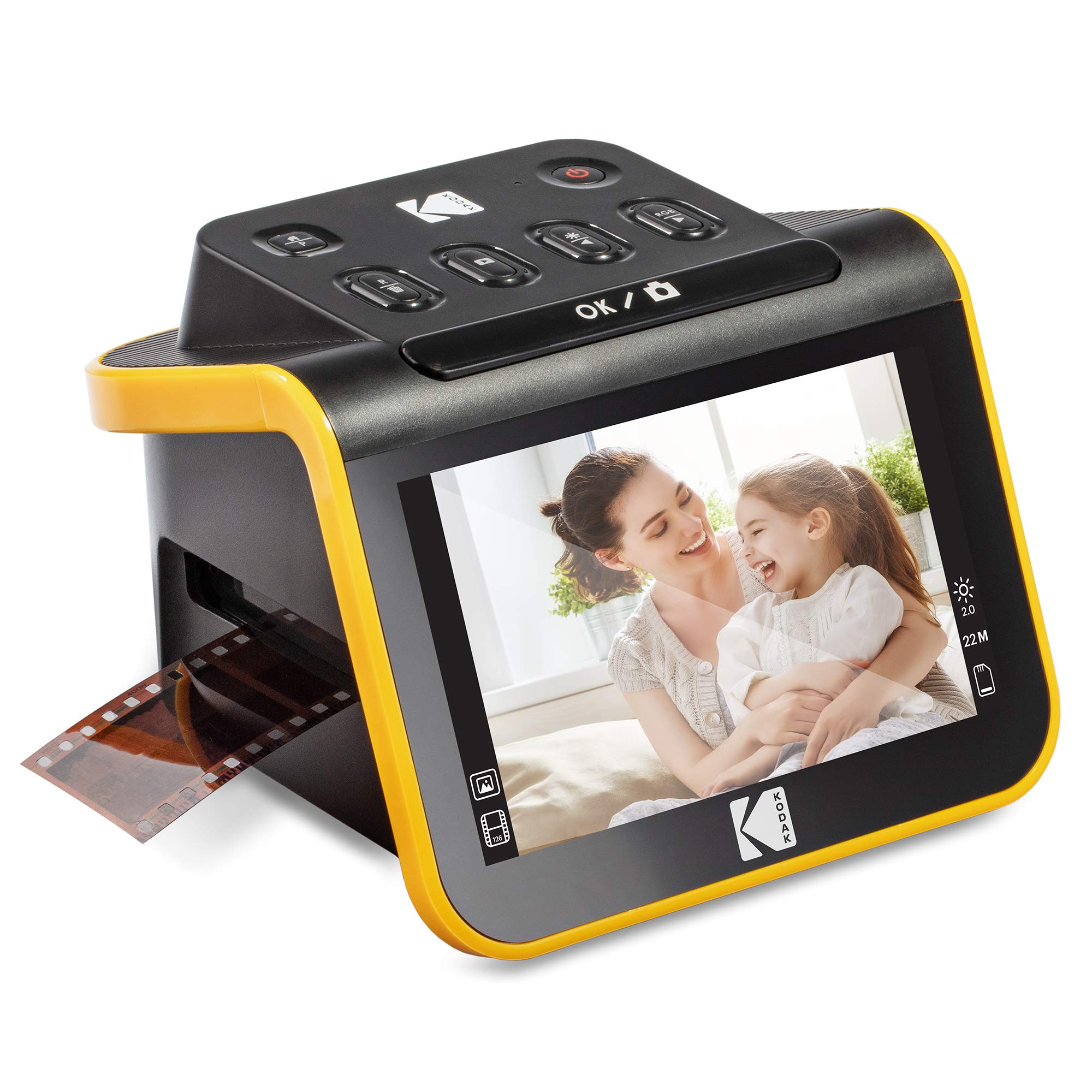
The KODAK Slide N Scan is designed to make home digitizing manageable, with a large built-in display, quick-feed inserts, and direct saving to a memory card.
This kodak slide n scan film & slide scanner review looks at where that convenience helps and what to consider before choosing it for an archive project.
Slide N Scan Review Summary
The quick verdict
12,000+ ratings
Read Amazon ReviewsKODAK Slide N Scan
A practical fit for families digitizing 135, 110, or 126 negatives and slides who want on-device previews and direct SD-card saving.
- Supports 135, 110, and 126 color or black-and-white negatives, as well as slides in those formats and 50mm slides.
- A 5-inch LCD with wide viewing angle includes gallery mode for previewing images.
- Quick-feeding tray technology is designed for continuous loading with the included film inserts.
- Onboard capture software offers scan, resize, and conversion functions, plus film type, color, brightness, and date/time options.

Pros
- The large 5-inch screen makes it easier to preview images on the device as you scan.
- Several common film and slide formats are covered by the included holders and adapters.
Consider before buying
- You will need to supply an SD or SDHC card, and the supported capacity tops out at 32GB.
- The format list is specific, so buyers should check their collection against the supported 135, 110, 126, and 50mm slide formats.
Read the full review summary
Slide N Scan combines support for 135, 110, and 126 negatives with 50mm slides, a 5-inch LCD, and simple onboard editing.
Its workflow centers on previewing, adjusting, and saving JPEG images on the scanner, so you can work through a collection without making a computer the control surface for every frame.
It is most appealing to households with compatible film formats that want a straightforward digitizing routine and a display for reviewing images as they go.
The SD or SDHC card is sold separately, and the stated maximum card capacity is 32GB; buyers planning a large archive should think through their card and file-management routine before starting.
The buying factors
Slide N Scan Scorecard
Editorial scores reflect listed features and buyer fit; they are not laboratory measurements or customer ratings.
Supported film formats
The supplied format list covers 135, 110, and 126 negatives, plus slides in those formats and 50mm slides.
On-device preview
A 5-inch LCD with gallery mode gives images a relatively large viewing area for previewing and sharing.
Loading workflow
Quick-feeding tray technology and multiple inserts are intended to support continuous loading.
Editing accessibility
A one-touch scan process includes options for film type, color, brightness, resizing, and date or time assignment.
Standalone saving
Images save directly to SD or SDHC cards up to 32GB, though the card is not included.
Output flexibility
USB-C computer connection and HDMI cable support different ways to connect or view images.
Key Features and Specifications of Slide N Scan
- Supports 135, 110, and 126 color or black-and-white negatives, as well as slides in those formats and 50mm slides.
- A 5-inch LCD with wide viewing angle includes gallery mode for previewing images.
- Quick-feeding tray technology is designed for continuous loading with the included film inserts.
- Onboard capture software offers scan, resize, and conversion functions, plus film type, color, brightness, and date/time options.
- Saves digital files directly to SD or SDHC cards up to 32GB; the memory card is not included.
- Includes a 50mm slide holder, adapters for 135, 110, and 126 film, a cleaning brush, USB cable, and HDMI cable.
- Connects to a Type-C USB-enabled computer; the LCD can also serve as a digital picture frame.
Pros and Cons of Slide N Scan
Pros
- The large 5-inch screen makes it easier to preview images on the device as you scan.
- Several common film and slide formats are covered by the included holders and adapters.
- Direct card saving supports a simple workflow without requiring a computer for every scan.
- Basic image adjustments and film-type selection are available from the scanner itself.
Consider before buying
- You will need to supply an SD or SDHC card, and the supported capacity tops out at 32GB.
- The format list is specific, so buyers should check their collection against the supported 135, 110, 126, and 50mm slide formats.
- The description gives no optical-resolution figure, so buyers with demanding print or restoration goals should confirm that the resulting files meet their needs before committing to a large project.
Who Should Buy Slide N Scan?
Good fit
Consider the Slide N Scan if your family archive is mostly made up of 135, 110, or 126 negatives and slides, and you would rather preview and make basic adjustments on a dedicated screen.
The large LCD and gallery mode are practical when you want to review frames together or check a batch before moving files elsewhere.
The quick-feed tray and included adapters may also suit a project involving many frames, since they are designed to keep loading moving.
Before purchase, check the format of your film, make sure you have a compatible memory card within the 32GB limit, and consider where you will back up the resulting JPEG files.
Its strongest case is convenience for personal digitizing and sharing.
If you need more control over image processing or have specialized quality requirements, confirm the scanner’s output details against your intended use before treating it as an archival solution.
Who should skip it
Skip this model if your film collection is mostly in formats outside the listed 135, 110, and 126 negatives or slides, or if your slides are not the supported 50mm type.
Check your mounts and film labels before buying.
It may not be the right fit if a 32GB card ceiling or an unspecified optical-resolution figure conflicts with your storage plan or output needs.
In that case, compare those requirements with the details of other scanners before deciding.
How the KODAK Slide N Scan Fits a Home Digitizing Project
A screen-centered workflow
The 5-inch LCD and gallery mode make previewing part of the device itself.
That is useful for checking a frame while working or showing images to family, though the display is primarily a convenience feature; buyers should assess final files on their intended viewing devices as well.
Format coverage is the first compatibility check
The included adapters address 135, 110, and 126 film, and the slide holder is specified for 50mm slides.
Before beginning a large project, identify the film and mount formats you own and check that they match these options, since the model’s convenience depends on compatible loading.
Direct saving still needs a file plan
Saving to an SD or SDHC card keeps the scanning process straightforward, but the card is not supplied and capacity is limited to 32GB.
A buyer digitizing a substantial collection should plan how to transfer, label, and back up batches so that family images remain organized after scanning.
Simple adjustments versus restoration work
Film selection and color or brightness controls can help with basic adjustments, while resize and conversion options keep common tasks on the scanner.
These controls are suited to an accessible home workflow; if you need extensive correction or a specific output resolution, verify that the resulting files fit that use before processing the whole collection.
Alternatives to Slide N Scan
Slide & Negative Scanners alternative
11,000+ ratings
Read Amazon ReviewsKODAK SCANZA Digital Film & Slide Scanner
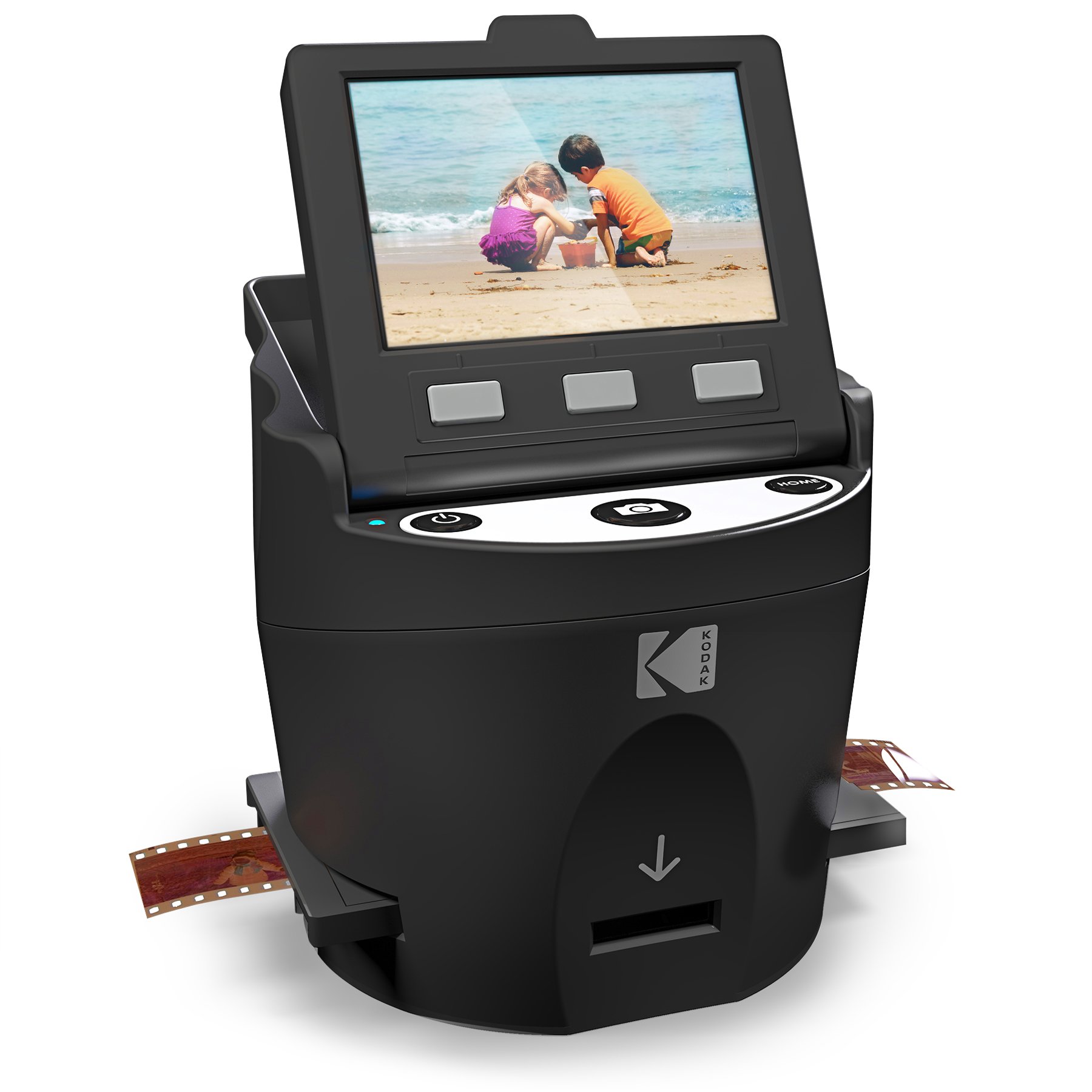
Choose between them based on format coverage and viewing setup: Slide N Scan offers the larger screen, while SCANZA adds Super 8 and 8mm compatibility and a higher stated card-capacity limit.
Check the formats you own before prioritizing screen size.
- SCANZA has a 3.5-inch adjustable-brightness, tilting display and supports 35mm, 126, 110, Super 8, and 8mm negatives and slides.
- It supports SD cards up to 128GB and includes a film cleaning brush, USB power cable, HDMI cable, AC adapter, and video cable.
- Slide N Scan pairs its 5-inch LCD with support for 135, 110, and 126 negatives and slides, plus a 50mm slide holder.
Slide & Negative Scanners alternative
100+ ratings
Read Amazon ReviewsHP Film & Slide Scanner HPFS500
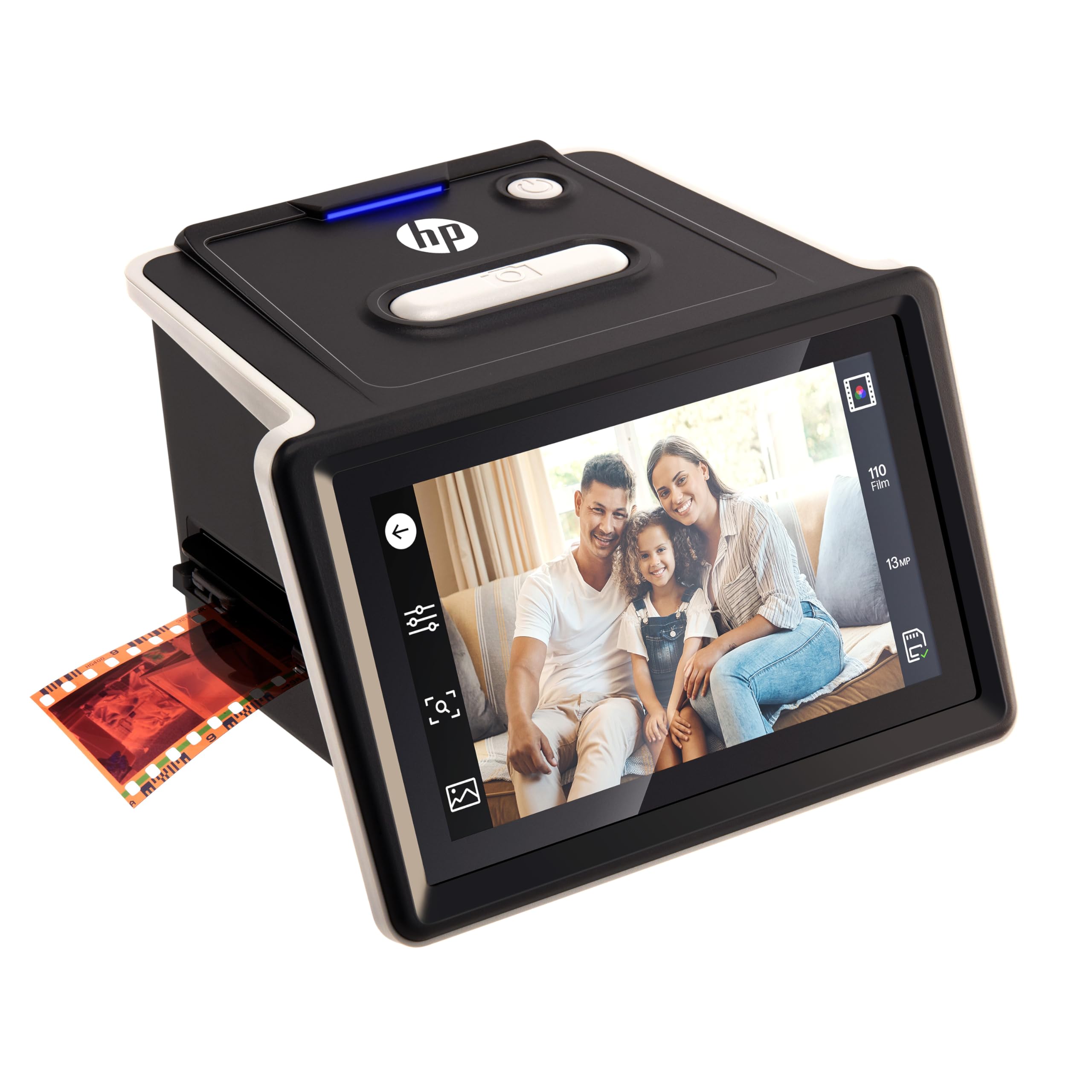
Compare the two if you want a 5-inch screen and similar listed formats.
HPFS500 supplies more detail about its sensor and computer requirements, while Slide N Scan lists 50mm slide support and includes an HDMI cable; match those details to your workflow.
- HPFS500 also has a 5-inch touchscreen and supports 135, 126, and 110 film strips and slides.
- Its description specifies a 13MP CMOS sensor with 22MP interpolation, USB-C power, and direct SD-card saving; it lists Windows 10 or later and macOS 10.15 or later as minimum computer requirements.
- Slide N Scan has a 5-inch LCD, gallery mode, and onboard options for film type, color, brightness, and date or time.
Is Slide N Scan Worth It?
The KODAK Slide N Scan is worth considering for a home archive of compatible 135, 110, and 126 film or 50mm slides.
Its large screen, direct card saving, and simple onboard controls make it approachable for previewing and converting family images.
Buy it if the format list, separate memory-card purchase, and 32GB limit fit your project. For demanding restoration or output requirements, verify the file quality and resolution you need before choosing a scanner.
Your review at a glance
12,000+ ratings
Read Amazon ReviewsKODAK Slide N Scan
A practical fit for families digitizing 135, 110, or 126 negatives and slides who want on-device previews and direct SD-card saving.
- Supports 135, 110, and 126 color or black-and-white negatives, as well as slides in those formats and 50mm slides.
- A 5-inch LCD with wide viewing angle includes gallery mode for previewing images.
- Quick-feeding tray technology is designed for continuous loading with the included film inserts.
- Onboard capture software offers scan, resize, and conversion functions, plus film type, color, brightness, and date/time options.