The best XLR microphones for a home studio or live setup depend on whether you need USB convenience, included desk hardware, or a straightforward wired vocal mic. These picks span dual-connection models and XLR-only designs, so check your interface, stand, and preferred controls before choosing.
Quick Top Products
Samson Q9U
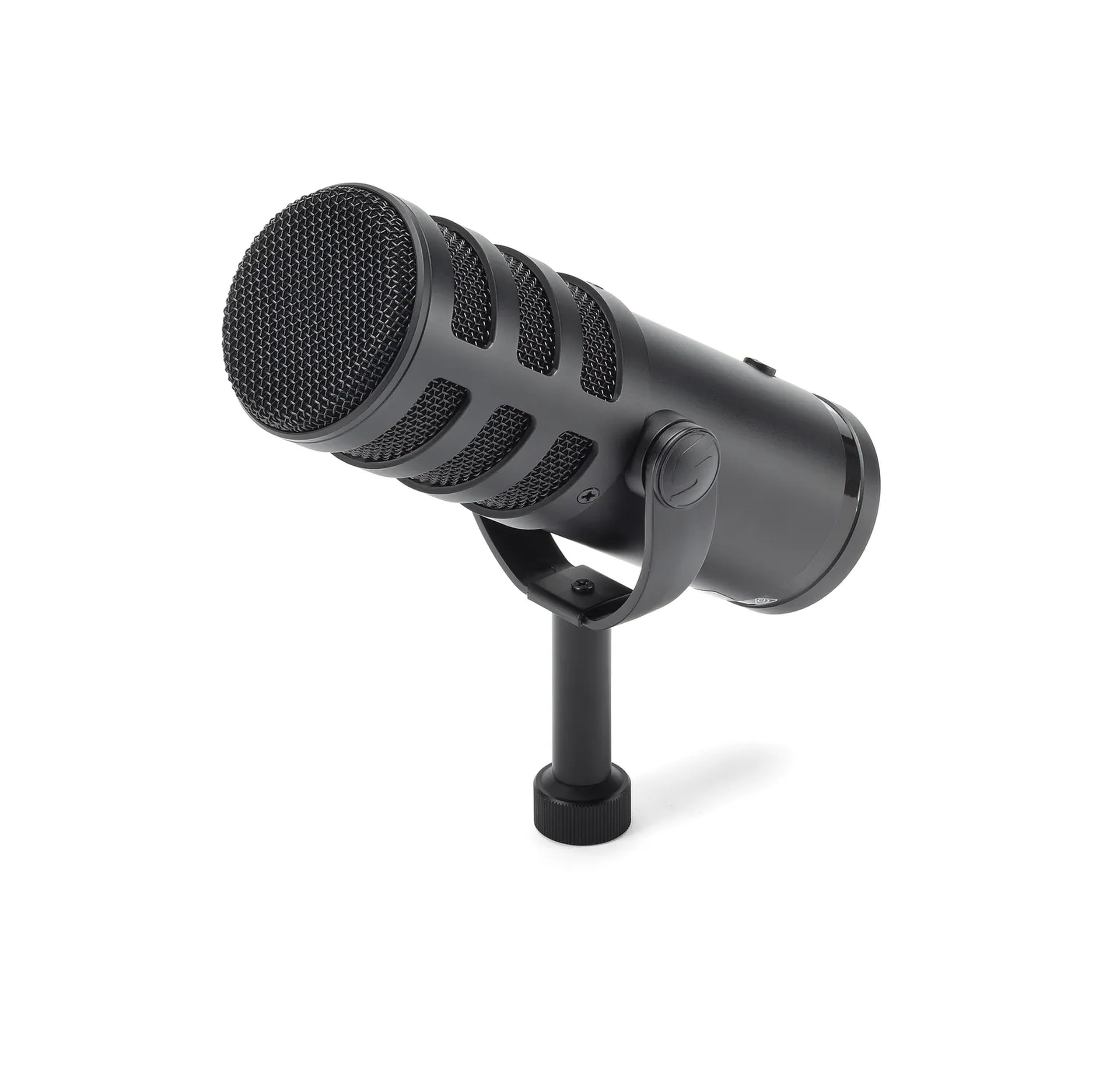
- Connect by XLR or USB-C as your recording setup requires.
- USB recording supports 24-bit/96kHz digital audio.
- Monitor without latency and mute from the microphone.
Best For: Home broadcasters who want USB-C convenience alongside a microphone-ready XLR output.

MAONO PD300X
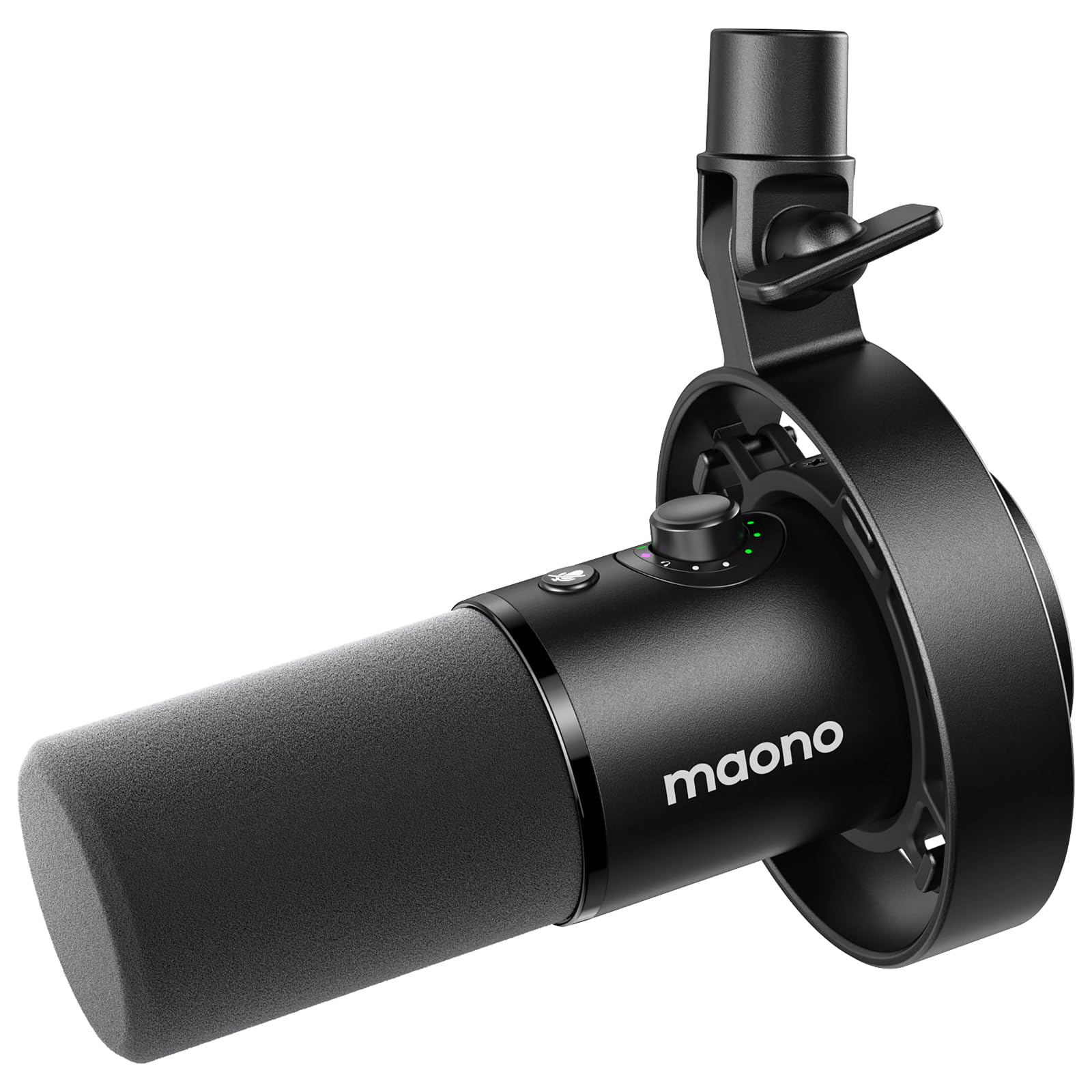
- Connect over USB or XLR for computer or mixer workflows.
- Shape audio with EQ, limiters, compressors, and high-pass filters.
- Use four presets and zero-latency monitoring.
Best For: Podcasters and creators who want dual connectivity plus software tools for shaping their sound.
MAONO PD400X
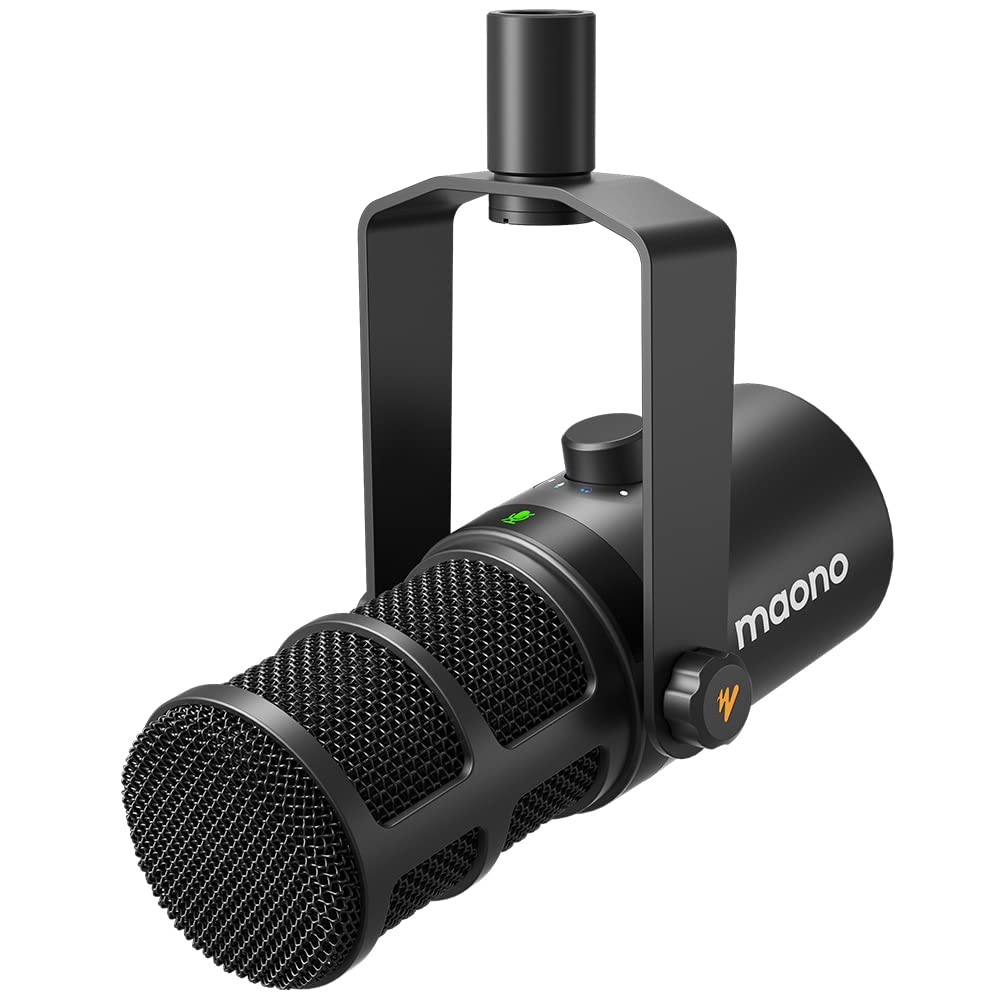
- Use USB for plug-and-play recording or XLR with audio gear.
- MAONO Link can adjust EQ, limiter, and compressor settings.
- Use the digital knob for gain, headphone volume, and monitor mix.
Best For: Home streamers and podcasters who want app-based tone controls and a multi-function onboard knob.
MAONO PD200XS
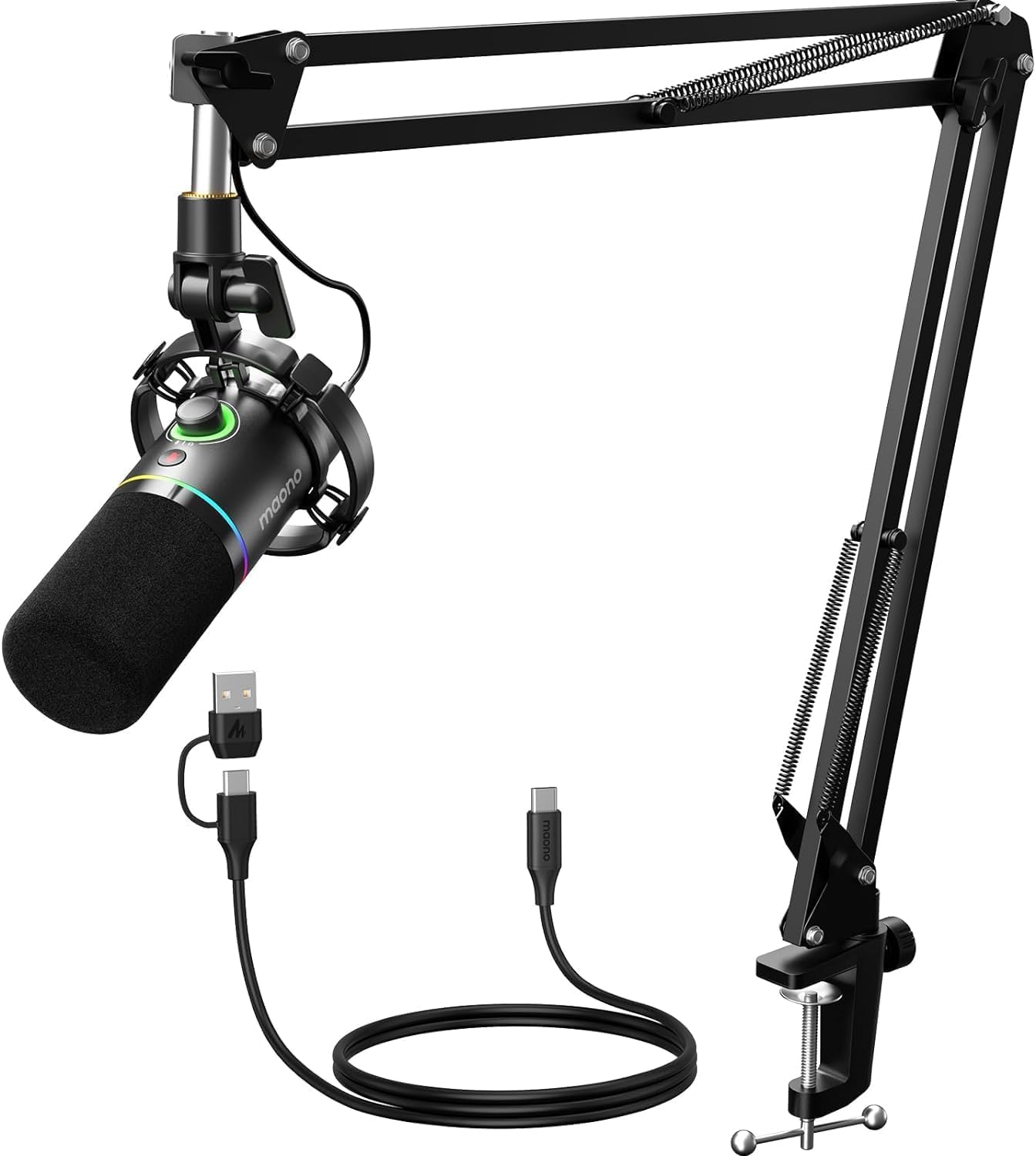
- Switch between USB and XLR connections.
- Includes an adjustable boom arm and shock mount.
- USB software offers EQ, limiter, and compressor adjustments.
Best For: Streamers who want an adjustable boom arm and USB software controls included with a dual-output microphone.
FIFINE AmpliGame AM8T
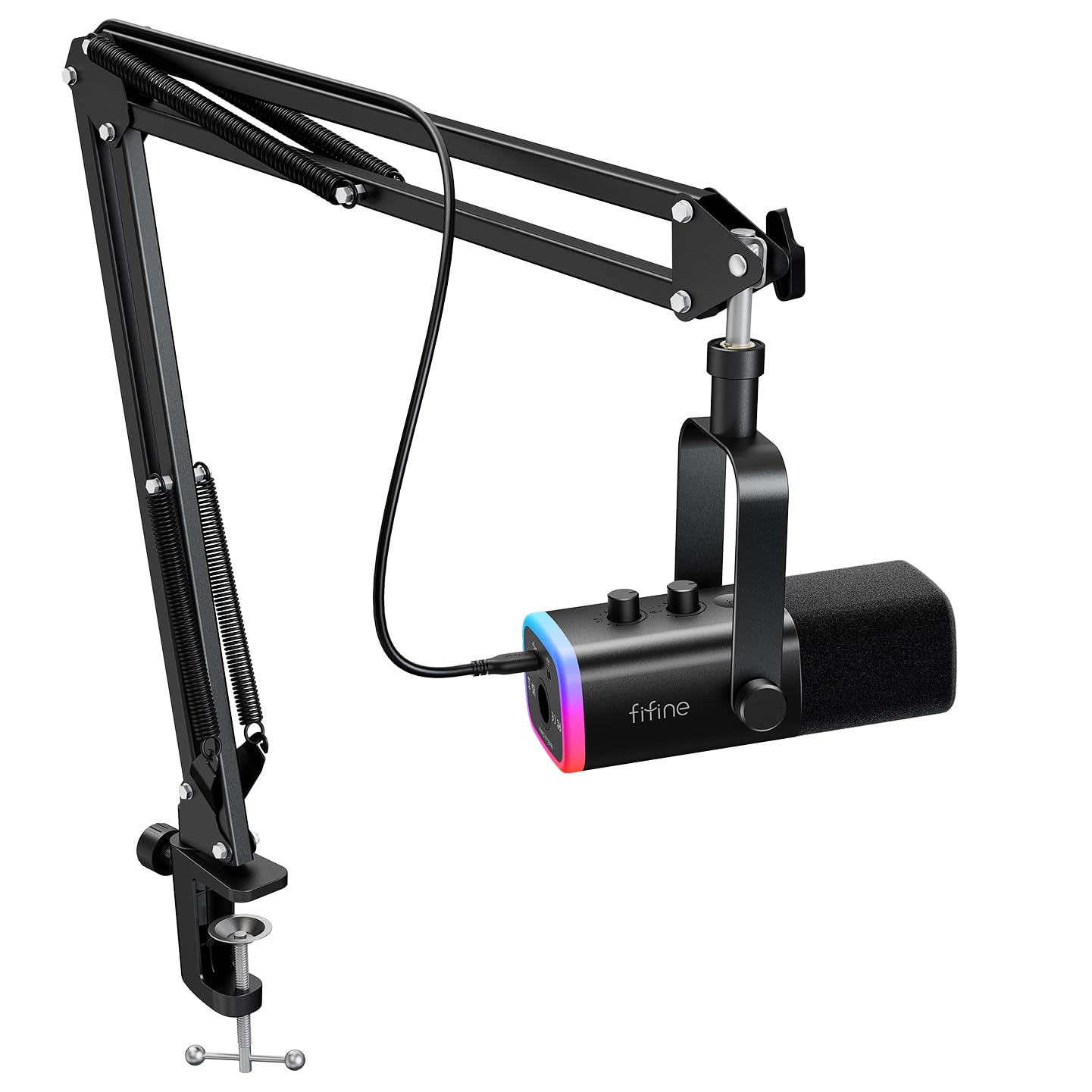
- Use USB with a PC or XLR with a mixer or sound card.
- The package includes a boom arm, clamp, and USB cable.
- USB controls include mute, gain, and headphone monitoring.
Best For: Streamers who want a USB/XLR mic with a supplied boom arm and real-time headphone monitoring.
FIFINE AmpliTank K688
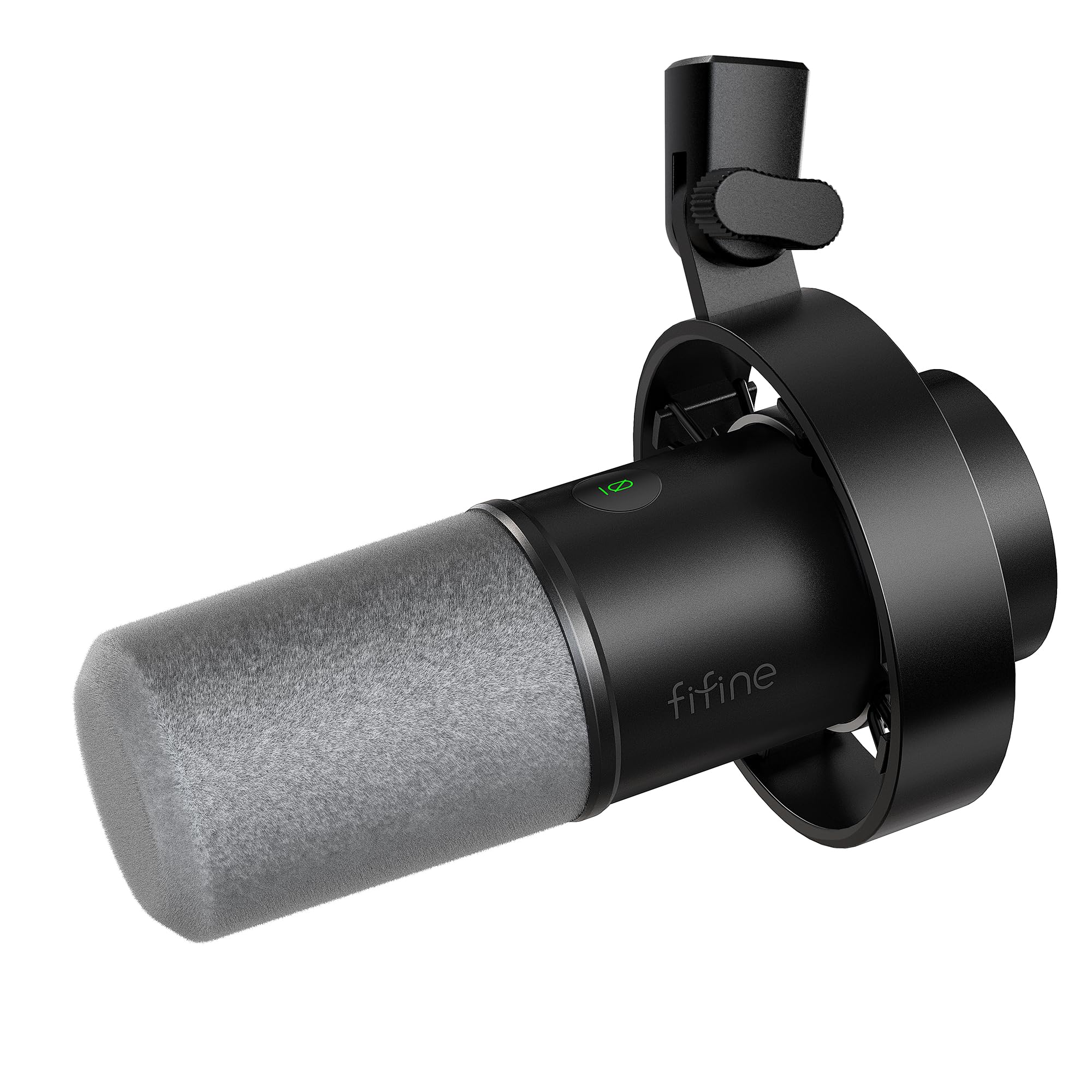
- Supports both USB and XLR connections.
- Includes a windscreen and shock mount.
- USB controls include mute, gain, and headphone monitoring.
Best For: Podcasters who have a stand or arm and want USB convenience with an XLR upgrade path.
FIFINE AmpliTank K688 White
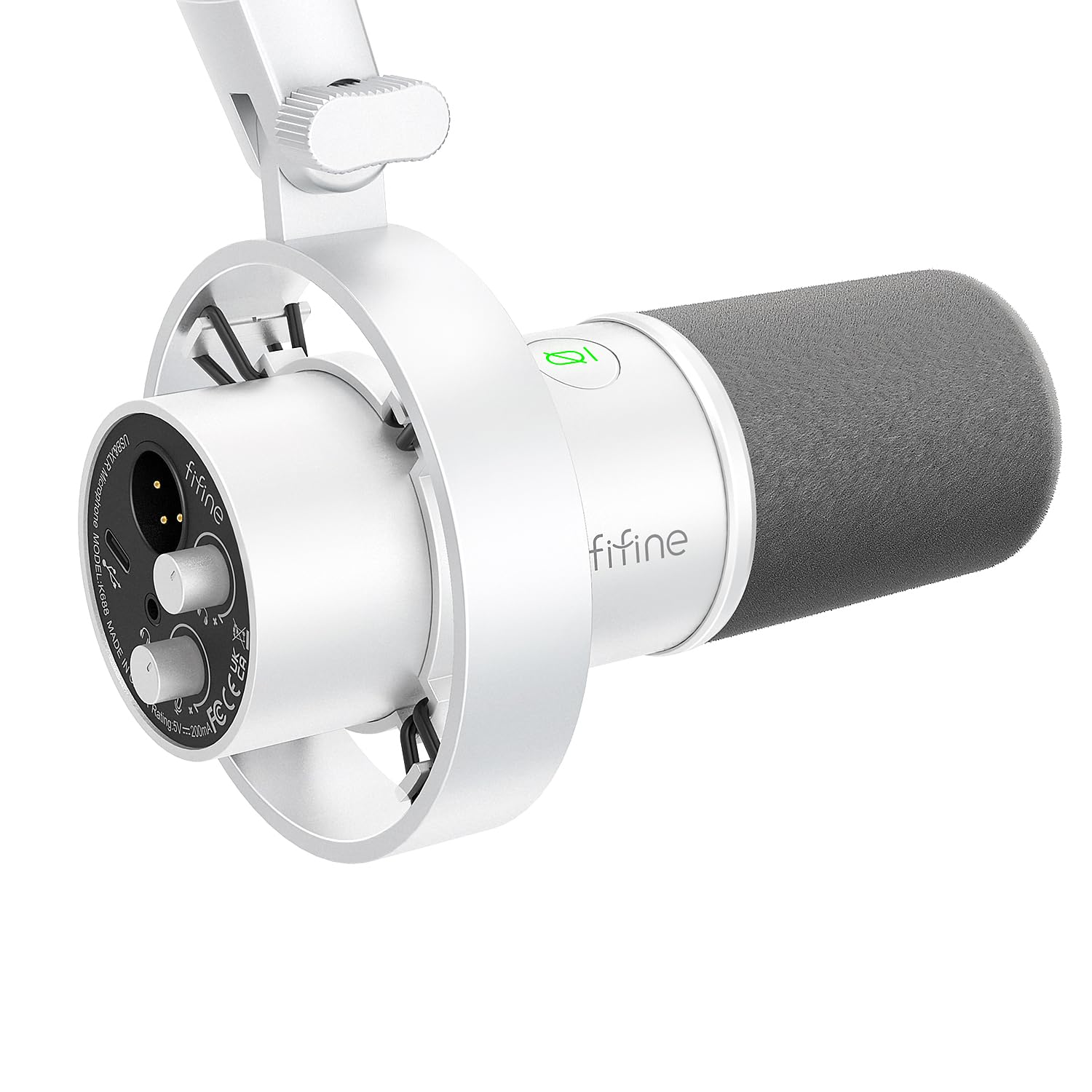
- Offers USB and XLR interfaces for different recording setups.
- Includes a shock mount and windscreen.
- USB mode provides mute and headphone monitoring controls.
Best For: Creators who prefer a white dual-output microphone and already have mounting hardware.
FIFINE AmpliTank K688 Pink
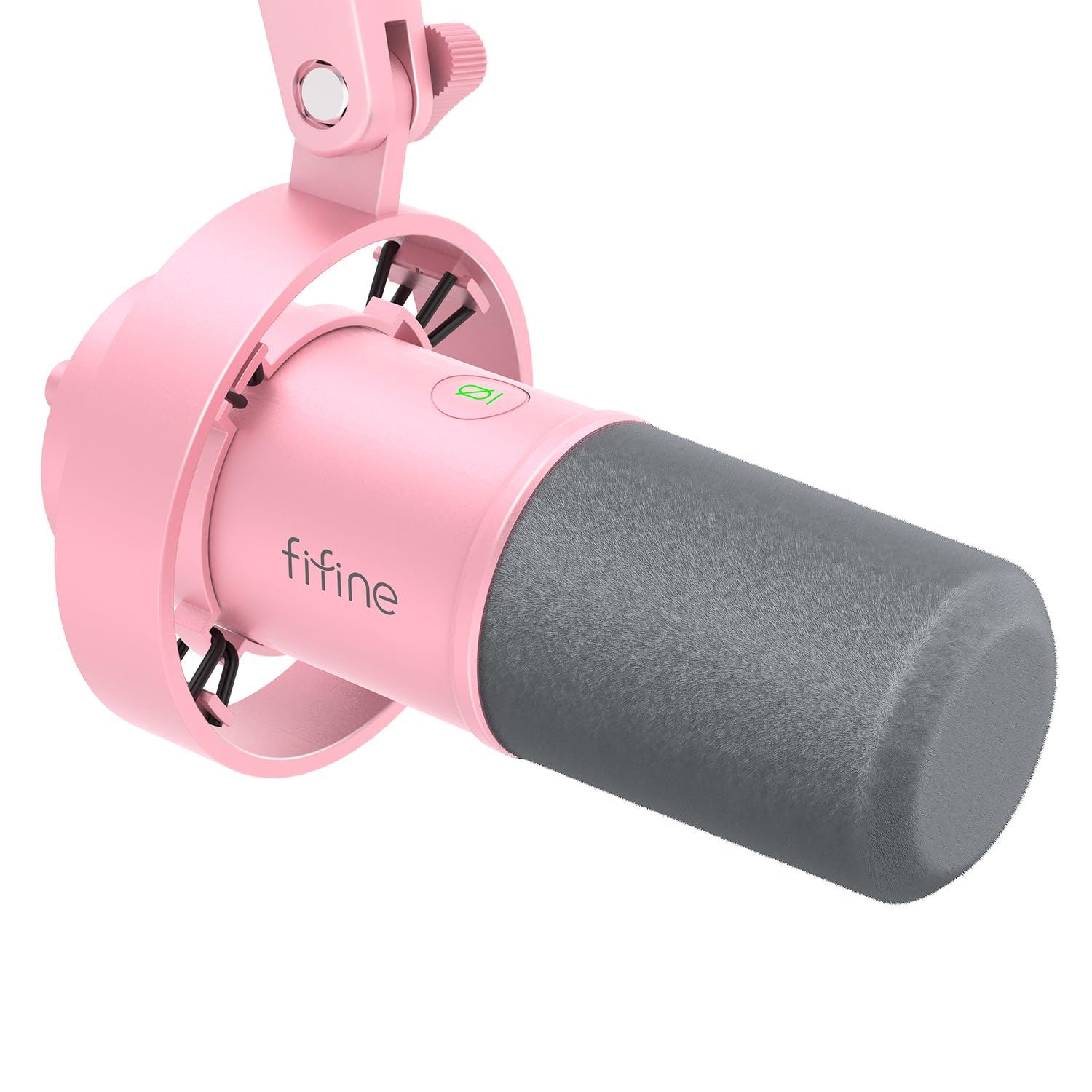
- Connect through USB or XLR.
- The package includes a shock mount and windscreen.
- USB mode has a mute button and headphone monitoring.
Best For: Creators who want the K688 USB/XLR workflow in a pink finish and can supply a separate stand or arm.
FIFINE AmpliGame AM8 White
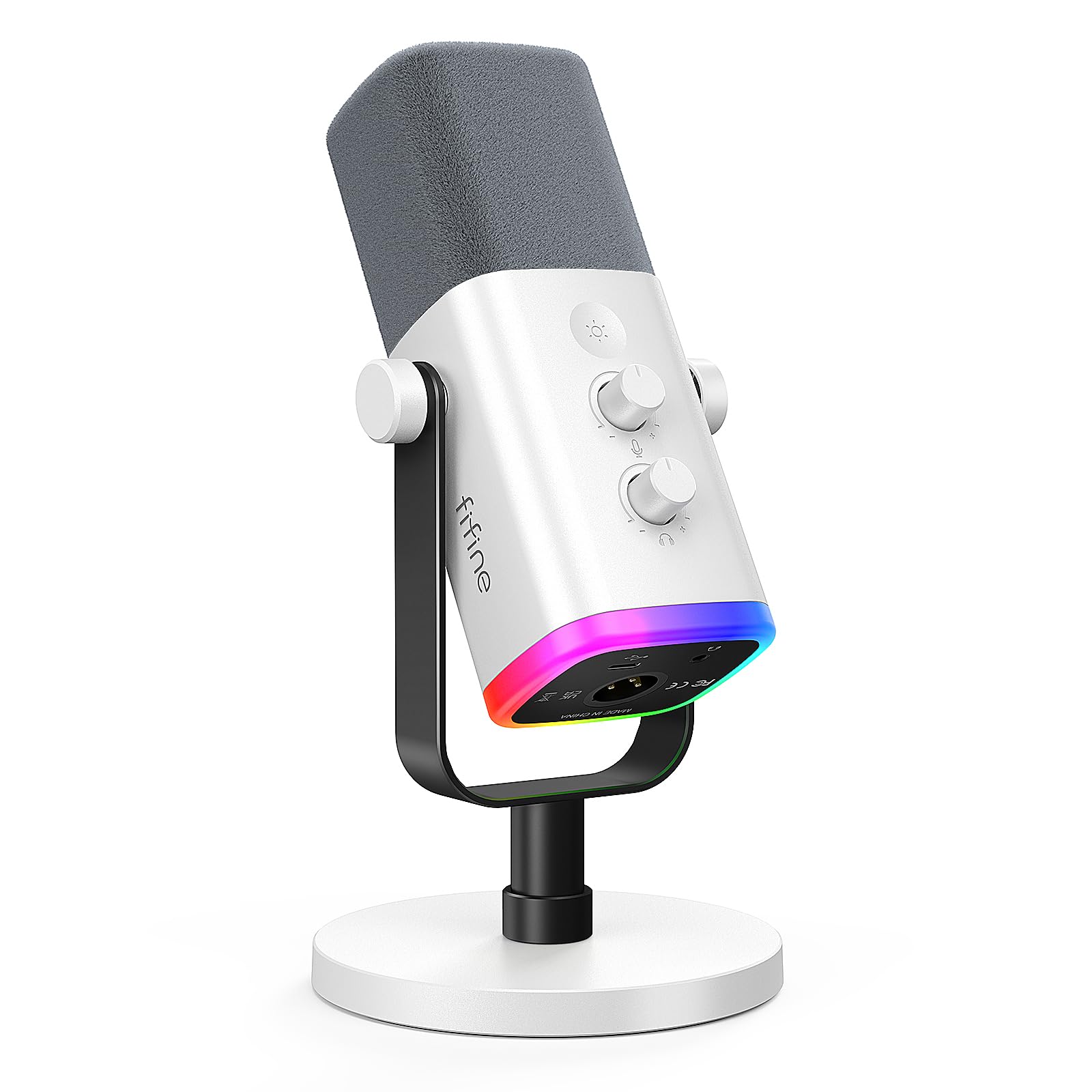
- Connect by USB or XLR.
- Adjust gain, mute, and headphone volume from USB controls.
- RGB lighting is controlled over USB.
Best For: PC streamers who want USB controls and RGB in a compact white desktop microphone.
MAONO PD100
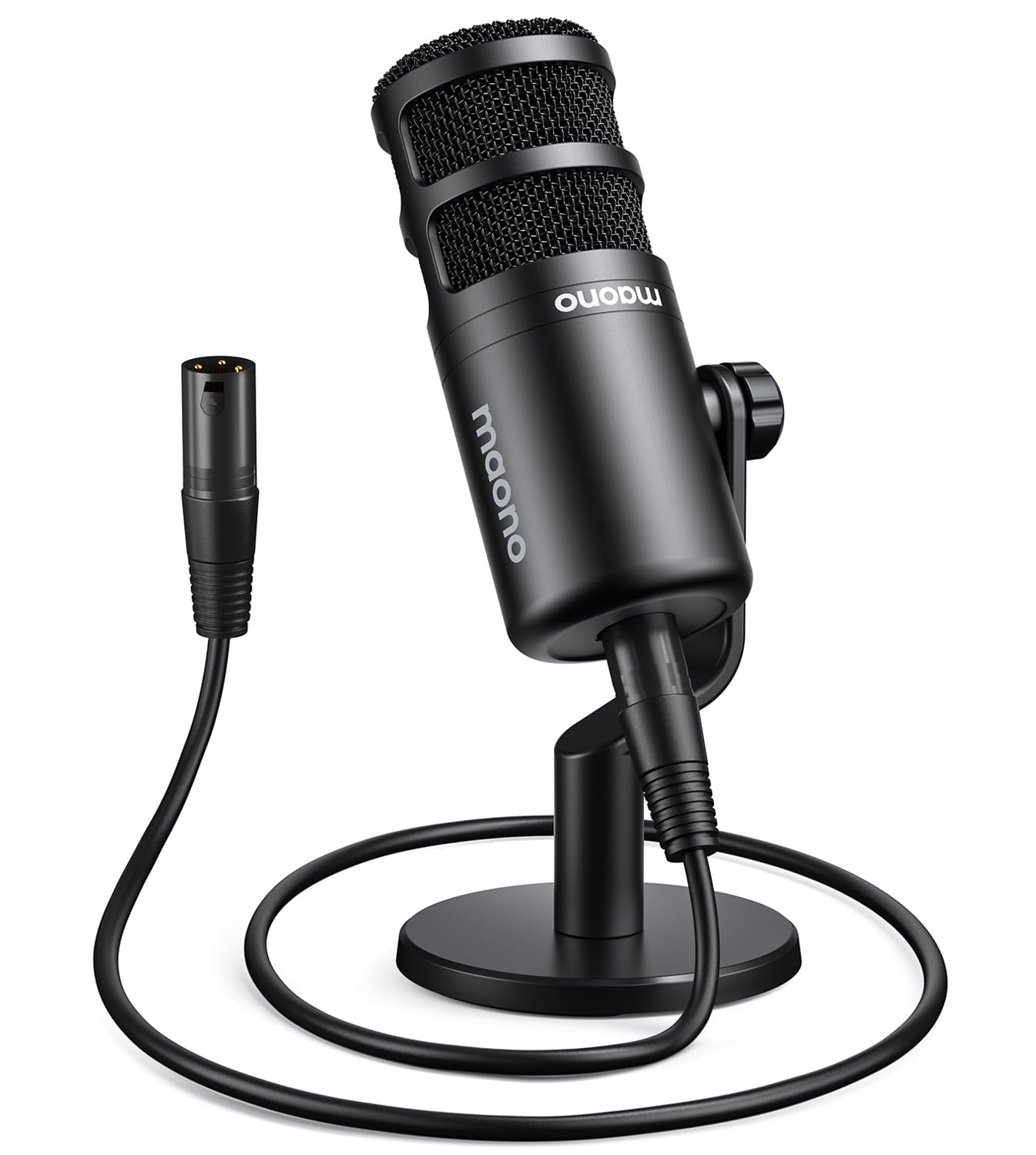
- The XLR microphone set includes a desktop stand, extender, and metal base.
- Includes a 6.56 ft XLR cable.
- Uses cardioid pickup and an inner double-layer pop filter.
Best For: First-time XLR users who want a desktop stand and XLR cable included with a voice-focused microphone.
Broadcast Controls and USB-C
SAMSON Q9U XLR/USB Dynamic Broadcast Microphone
The Samson Q9U pairs an XLR output with USB-C, making it a flexible fit for a broadcast setup that may grow from direct computer recording to an audio interface. Its USB connection supports 24-bit/96kHz digital audio, and zero-latency headphone monitoring helps you hear your voice in real time.
A cardioid pattern, internal pneumatic shock mount, and dual-layer windscreen address ambient pickup, mechanical noise, and plosives. The microphone does not include a stand in the supplied details, so plan for mounting hardware.
It suits speech and music recording where onboard monitoring and two connection paths are useful.
Best For: Home broadcasters who want USB-C convenience alongside a microphone-ready XLR output.
| Pros | Cons |
|---|---|
|
|
Choose the Q9U if you want one microphone to connect directly by USB-C now and to an interface through XLR later. Its monitoring, mute switch, shock mount, and windscreen make it particularly oriented toward broadcast and podcast speech.
Before buying, confirm that your setup has a compatible stand and the XLR cable you need; neither accessory is identified in the supplied details. The high-resolution USB mode and XLR path are the distinguishing features, while your interface and recording workflow determine which connection you will actually use.
Software-Guided Sound Shaping
MAONO Dynamic Microphone-XLR USB Podcast Recording Mic: for Vocal Recording, Content Creation, Home Studio, Voiceover, with 192kHz/24bit, Noise Reduction, Mic Gain, Monitoring, Mute (PD300X)
The MAONO PD300X combines USB and XLR connections with software adjustments for a more configurable recording chain. Its MAONO Link controls include EQ, limiters, compressors, and high-pass filters, while four preset modes offer a quicker way to change the setup.
A three-in-one knob handles microphone gain, headphone volume, and monitoring, and zero-latency monitoring lets you listen as you record. The supplied details do not identify a stand or XLR cable in the package, so factor those into an interface-based setup.
This option fits creators who expect to tune a voice recording in software rather than rely only on physical controls.
Best For: Podcasters and creators who want dual connectivity plus software tools for shaping their sound.
| Pros | Cons |
|---|---|
|
|
The PD300X suits a creator who wants to move between direct USB recording and an XLR interface while having software controls available for tone and dynamics. Its four presets can simplify changes between common uses, while the advanced controls allow more adjustment.
That flexibility matters most if you expect to tune audio in MAONO Link; a simpler setup may not need the extra workflow. Check the package contents and your mounting plan before ordering, because the available details do not establish which stand or cables are included.
USB and XLR With App Controls
MAONO Dynamic Microphone, USB/XLR Podcast PC Microphone with Software, EQ,Tap-to-Mute, Headphone Jack, Gain Knob & Volume Control, Studio Mic for Broadcast, Recording, Streaming & Gaming (PD400X)
The MAONO PD400X is a USB/XLR dynamic microphone aimed at studio recording, home recording, podcasting, and live streaming. With USB, it works as a plug-and-play microphone and opens MAONO Link controls for vocal tone, gain, monitor mix, EQ, limiter, and compressor adjustments.
Its 3-in-1 digital knob handles mic gain, headphone volume, and monitor mix, with a touch mute key for quick silencing. XLR output supports connection to a professional interface, mixer, or portable PA system.
The supplied product details do not identify included mounting hardware or cables, so check what your particular setup requires before choosing it.
Best For: Home streamers and podcasters who want app-based tone controls and a multi-function onboard knob.
| Pros | Cons |
|---|---|
|
|
Pick the PD400X if you value app-based sound controls as well as a direct USB connection and an XLR path for other equipment. The three-in-one knob makes monitoring and gain adjustments accessible at the microphone, while the software adds more detailed tone shaping.
It is a better match for a workflow that will use those adjustments than for someone seeking only a basic XLR vocal mic. Before buying, verify the stand and cable arrangement you need, since the supplied information does not detail those accessories.
Boom Arm and Software in One Kit
MAONO XLR/USB Dynamic Microphone Kit, RGB Podcast Mic with Software, Mute, Gain Knob, Volume Control, Boom Arm for Streaming, Gaming, Voice-Over, Recording-PD200XS Black
The MAONO PD200XS is a dual USB/XLR dynamic microphone kit that includes an adjustable boom arm, shock mount, and USB cable. The arm gives you a way to position the mic without separately sourcing a support, while XLR output can connect to an interface, mixer, or portable PA system.
In USB mode, MAONO Link adds EQ, limiter, and compressor adjustments, along with RGB controls. A smart knob manages mic gain and headphone volume, and a one-click mute key has an LED indicator.
The XLR cable is not included, so an interface-based setup will need one. This kit suits streamers and podcasters who value a ready-to-mount USB start.
Best For: Streamers who want an adjustable boom arm and USB software controls included with a dual-output microphone.
| Pros | Cons |
|---|---|
|
|
Choose the PD200XS if you want a kit that provides an adjustable arm and can start on USB before moving to an XLR mixer or interface. Its app controls and one-click mute are useful for a stream or podcast desk, and the included USB cable means fewer initial setup parts to source.
The central tradeoff is that the XLR cable is explicitly absent, so budget for it if you plan to use analog output. Check that the included arm suits your desk and positioning needs.
Desk-Mounted Streaming Set
FIFINE XLR/USB Gaming Microphone Set, Dynamic PC Mic for Streaming Podcasting, Computer RGB Mic Kit with Boom Arm Stand, Mute Button, Headphones Jack, for Recording Vocal Voice-Over-AmpliGame AM8T
The FIFINE AmpliGame AM8T pairs a dynamic USB/XLR microphone with a boom arm, making it a practical option for a desk-based streaming or podcast setup. USB supports plug-and-play use with a PC, while XLR connects to a mixer or sound card.
On USB, the mic provides a mute button, gain knob, headphone jack, and headphone volume control. A cardioid pattern and included windscreen support close vocal recording, and RGB lighting can be changed or turned off using its button.
The package includes a USB cable and desk clamp, but no XLR cable. Check your desk thickness, since the clamp is specified for desktops less than 2 inches thick.
Best For: Streamers who want a USB/XLR mic with a supplied boom arm and real-time headphone monitoring.
| Pros | Cons |
|---|---|
|
|
The AM8T is a sensible fit if your microphone will live on a desk and you want the arm included in the package. It offers an accessible USB start, then an XLR connection for a mixer or sound card, with monitoring and mute controls available in USB mode.
Confirm that your desk works with the clamp and obtain an XLR cable if needed. Compared with a mic-only choice, its main appeal is the bundled positioning hardware; the tradeoff is that analog cable remains a separate purchase.
Mic-Only Dual-Connection Choice
FIFINE Dynamic Microphone, XLR/USB Podcast Recording PC Microphone for Vocal Voice-Over Streaming, Studio Metal Mic with Mute, Headphone Jack, Monitoring Volume Control, Windscreen-Amplitank K688
The FIFINE AmpliTank K688 provides both USB and XLR connectivity in a metal dynamic microphone package. USB connects directly to a computer, and its front-panel mute, gain, headphone monitoring, and monitoring-volume controls make everyday recording adjustments accessible.
The cardioid pattern, windscreen, and shock mount address room pickup, plosives, and desk vibration. This package includes an 8.2 ft USB cable and a thread adapter, but not a boom arm, mic stand, or XLR cable.
It works for a podcast or voice-over desk if you already have suitable mounting hardware or plan to add it. Consider the accessories alongside the mic when comparing it with arm-included kits.
Best For: Podcasters who have a stand or arm and want USB convenience with an XLR upgrade path.
| Pros | Cons |
|---|---|
|
|
Choose this K688 if you want a dual-connection microphone and already have a way to mount it. Its USB monitoring and mute controls support a simple computer workflow, while XLR offers a route to an interface or mixer.
The shock mount and windscreen are included, but the lack of a stand or arm changes the total setup cost compared with kits that supply one. Check the connector and mounting hardware needs of your desk before ordering, especially if you intend to use XLR.
Shock-Mounted White Studio Mic
FIFINE Studio XLR Dynamic Microphone, USB PC Podcast Microphone for Streaming Recording, XLR/USB Vocal Mic with Tap-to-Mute, Gain Knob, Headphones Monitoring-Amplitank K688 White
This white AmpliTank K688 offers the same core dual-connection workflow as a desktop podcast microphone: USB for direct computer use and XLR for an interface or mixer. Its cardioid pickup, shock mount, and windscreen are intended to limit unwanted room sound, vibration, and plosives.
USB operation provides mute and volume controls plus headphone monitoring. The package includes a USB cable, shock mount, and thread adapter, but not a boom arm, mic stand, or XLR cable.
Choose it when its white finish fits your recording space and your mounting equipment is already sorted. The controls are USB-only, so verify which functions matter if you expect to use XLR.
Best For: Creators who prefer a white dual-output microphone and already have mounting hardware.
| Pros | Cons |
|---|---|
|
|
The white K688 makes sense for a creator matching a light-colored desk setup who also wants USB and XLR in one microphone. It includes the shock mount and windscreen, but you need a separate stand or arm to position it.
Its mute and monitoring controls apply in USB mode, a meaningful distinction if your plan is to run the mic through an XLR interface. Compare the package contents and color with the other K688 offer carefully; the supplied facts identify both as K688 variants, so choose one based on the offer and finish rather than treating them as different microphone models.
Pink Dual-Output Recording Mic
FIFINE XLR/USB Dynamic Microphone, Studio XLR Vocal Podcast Microphone for Recording, USB Streaming Mic with Mute Button, Gain Knob, Headphones Monitoring for Voice-Over, Video-Amplitank K688 Pink
The pink FIFINE AmpliTank K688 combines USB and XLR connections with a cardioid dynamic capsule and a shock mount. USB connects to a computer through the included cable, while XLR is available for an audio interface or mixer.
The USB controls include mute, monitoring, and volume adjustment, and the windscreen helps with plosives during close vocal recording. The package does not include an XLR cable, boom arm, or mic stand, so plan the rest of the recording position separately.
This color variant may suit a coordinated creator desk, but it is the same K688 model family as other listed color offers; compare the finish and package before deciding.
Best For: Creators who want the K688 USB/XLR workflow in a pink finish and can supply a separate stand or arm.
| Pros | Cons |
|---|---|
|
|
This offer is for the pink version of the K688 dual-output microphone, so its value depends partly on whether that finish suits your space. The core tradeoff is familiar: USB brings onboard controls and monitoring, while XLR provides an interface or mixer connection, but mounting hardware and the XLR cable are extra.
Because another supplied ASIN is also a K688 in a different color, this is not a separate functional model to add to a generic roundup. Compare the offer's color and package details and select only one K688 variant.
Compact RGB USB/XLR Desktop Mic
FIFINE XLR/USB Gaming Microphone for Streaming Podcasting, PC Computer RGB Mic, with Gain Knob, Mute Button, Monitoring Jack, Gamer Mic for Recording Video Creation-AmpliGame AM8 White
The white FIFINE AmpliGame AM8 is a compact dynamic microphone with both USB and XLR connections. Its USB controls include a tap-to-mute button, gain knob, headphone jack, and headphone volume control, while XLR connects to a mixer or sound card.
RGB lighting can be changed or switched off with a button, though those lighting controls are USB-only. The microphone is end-addressed, with a suggested recording range of 2 to 6 inches, so positioning the top toward the sound source matters.
This offer is the desktop microphone without the boom-arm kit found in other AM8 listings, making it a better fit when you already have a stand or prefer a smaller desk footprint.
Best For: PC streamers who want USB controls and RGB in a compact white desktop microphone.
| Pros | Cons |
|---|---|
|
|
Pick this AM8 if you want a white desktop mic with a USB control set and an XLR path, and you already have a way to mount or position it. The compact design avoids buying the arm kit if you do not need one, while the USB-only RGB and controls mean the XLR workflow has fewer onboard conveniences.
Keep the end-addressed orientation and close suggested recording range in mind when arranging your desk. Confirm the included mounting hardware before buying, since this offer's details do not establish it.
XLR Desk Stand and Cable Bundle
MAONO PD100 XLR Podcast Microphone, Cardioid Studio Dynamic Metal Desk Mic | Compatible with Audio Interface, Audio Mixer, Sound Card for Vocal Recording, Streaming, Voiceover, Music, Content Creation
The MAONO PD100 is an XLR-only dynamic microphone set that includes a desktop stand, rod extender, metal base, and XLR cable. Its cardioid pickup and inner double-layer pop filter are designed for close voice recording, including podcasts, streaming, and voice-over work.
The compact metal body can be fitted to other mic stands through built-in 5/8-inch and 3/8-inch threads, while the included desktop base provides an immediate placement option. Since it has no USB connection, it needs an audio interface, mixer, or other compatible XLR input.
This is a useful pick when you want the cable and basic desk support bundled rather than sourced separately.
Best For: First-time XLR users who want a desktop stand and XLR cable included with a voice-focused microphone.
| Pros | Cons |
|---|---|
|
|
Choose the PD100 if your recording setup already accepts XLR and you want a straightforward desk-mounted kit with its cable included. It saves you from sourcing a basic stand and cable separately, and its voice-oriented cardioid pattern and pop filter suit podcasting or streaming.
The tradeoff is that it cannot connect directly over USB, so a compatible interface or mixer is part of the setup. Check the desk stand's positioning against your recording posture and confirm your input device accepts the included cable.
How to Choose Xlr Microphones
How We Picked Best XLR Microphones
This selection prioritizes microphones with a documented XLR connection and a clear fit for recording, streaming, podcasting, or live vocal work. Dual USB/XLR designs appear where USB convenience, onboard monitoring, or software controls add a distinct setup path.
XLR-only choices remain useful when a simple analog connection and compatible interface are already part of the plan.
We also considered what comes in the box. A microphone with a boom arm or desktop stand solves a different problem from a compact mic-only package.
Color variants and duplicate model offers were treated as one product family, and karaoke microphones with quarter-inch connections were left out because they do not connect as XLR microphones.
Comparing XLR Microphones and USB/XLR Options
The Samson Q9U and MAONO PD300X emphasize recording control in different ways: the Samson provides USB-C, high-resolution USB audio, and zero-latency monitoring, while the MAONO adds software EQ and dynamics controls. The PD400X also pairs an app with a three-in-one control knob.
These are better fits when you want to shape a podcast or broadcast workflow beyond basic microphone gain.
For desk convenience, compare the MAONO PD200XS and FIFINE AM8T kits, which include boom-arm hardware, with the K688 variants and AM8 desktop mic, where mounting hardware is not included in the described package. The MAONO PD100 is the XLR-only stand-and-cable option, so it makes sense when direct USB recording is not needed.
Check whether an XLR cable is included before planning an analog setup.
| Product | Standout features | Best for |
|---|---|---|
| Samson Q9UCheck Price |
| Home broadcasters who want USB-C convenience alongside a microphone-ready XLR output. |
| MAONO PD300XCheck Price |
| Podcasters and creators who want dual connectivity plus software tools for shaping their sound. |
| MAONO PD400XCheck Price |
| Home streamers and podcasters who want app-based tone controls and a multi-function onboard knob. |
| MAONO PD200XSCheck Price |
| Streamers who want an adjustable boom arm and USB software controls included with a dual-output microphone. |
| FIFINE AmpliGame AM8TCheck Price |
| Streamers who want a USB/XLR mic with a supplied boom arm and real-time headphone monitoring. |
| FIFINE AmpliTank K688Check Price |
| Podcasters who have a stand or arm and want USB convenience with an XLR upgrade path. |
| FIFINE AmpliTank K688 WhiteCheck Price |
| Creators who prefer a white dual-output microphone and already have mounting hardware. |
| FIFINE AmpliTank K688 PinkCheck Price |
| Creators who want the K688 USB/XLR workflow in a pink finish and can supply a separate stand or arm. |
| FIFINE AmpliGame AM8 WhiteCheck Price |
| PC streamers who want USB controls and RGB in a compact white desktop microphone. |
| MAONO PD100Check Price |
| First-time XLR users who want a desktop stand and XLR cable included with a voice-focused microphone. |
Choosing an XLR Podcast Microphone for Your Room
A dynamic microphone with cardioid pickup is a common voice-recording format in this set, but positioning still matters. The AM8 is end-addressed and gives a suggested close recording range, so aim its top toward your voice and arrange the stand accordingly.
Other microphones mention cardioid pickup or windscreen and shock-mount features; these help explain their intended use, but room acoustics and placement remain part of the recording setup.
Consider how you will monitor. The Q9U specifies zero-latency headphone monitoring, while the MAONO and FIFINE USB/XLR options include headphone jacks or monitoring controls that operate in USB mode.
If you expect to use XLR, check which onboard functions remain available in that connection mode and whether your interface provides the monitoring controls you need.
What to Check Before Buying a Studio XLR Mic
Start with your input device: XLR microphones need a compatible XLR input on an interface, mixer, or other audio equipment. If you also want to record directly to a computer, a dual USB/XLR model gives you that alternate connection.
USB-only controls such as mute, RGB, or software EQ may not carry over to XLR, so choose based on the workflow you plan to use most.
Then account for the whole package. Some picks include a boom arm, desktop stand, or cable; several K688 offers omit the XLR cable and stand.
Confirm the mounting option, cable, desk clamp fit, and color offer before comparing costs. The most suitable XLR microphone is the one that connects cleanly to your current gear and includes the pieces your recording space still needs.
Who Should Buy Which XLR Microphone
Choose the Samson Q9U if USB-C recording, XLR expansion, and zero-latency monitoring are central to a broadcast setup. Consider the PD300X or PD400X if you want software tools for shaping a voice track, and the PD200XS or AM8T if an included boom arm is more useful than extra app control.
For a stand-and-cable bundle with a direct XLR workflow, look at the MAONO PD100. If you have mounting hardware and want USB convenience plus an XLR path, compare one K688 offer or the white AM8 based on the features and finish you need.
Choose one K688 color variant only; the pink and white offers share the same model family.